










There’s a common household problem that’s lurking in your pipes, and you might not be aware of it: Hard Water. From the more obvious signs like stubborn soap scum or spotted plates to the more impossible-to-ignore signs like reduced appliance efficiency and plumbing problems, hard water can affect every part of your home.
The good news is that hard water is relatively easy to identify once you know what to look for. By recognizing the warning signs and performing a few simple tests, you can determine whether hard water is affecting your home and take steps to protect your plumbing and appliances.
Follow along with this guide to explore the most common signs of hard water, simple ways to test your water, and what you can do if it is causing problems.
What is Hard Water?
Hard water contains elevated levels of dissolved minerals, primarily calcium and magnesium. These minerals are naturally absorbed as water moves through rock and soil before entering municipal water systems or private wells.
These minerals are natural and water with high mineral content is generally safe to drink. However, it’s the accumulation of these minerals that causes problems. When water is heated or evaporates, the minerals are left behind, forming a hard, chalky residue known as limescale.
Over time, limescale can build up inside pipes, water heaters, appliances, and fixtures, which reduces efficiency and causes damage to your entire system.
Why Hard Water Matters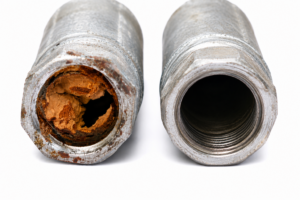
Many homeowners view hard water as a minor inconvenience, but the long-term effects can be costly.
Hard water can:
- Reduce appliance efficiency
- Increase energy consumption
- Shorten the lifespan of water heaters and dishwashers
- Restrict water flow through plumbing
- Create additional cleaning challenges
The earlier hard water is identified, the easier it is to prevent scale buildup from becoming a major problem.
Common Signs Your Home has Hard Water
Let’s go over some of the easiest ways to identify if there’s too much limescale built up.
White Spots on Dishes and Glassware
When you pull your clean dishes out of the dishwasher, have you noticed cloudy residue or white spots? These spots are often caused by mineral deposits left behind when water evaporates. They cling to dishes, making them look dirtier than they are even after washing.
If you’re using quality detergent and you still see cloudy glasses or white spotted dishes, hard water may be the culprit.
Soap Scum in Showers and Tubs
The minerals react with soap, making it harder to rinse away completely. This reaction creates the familiar white or gray film known as soap scum, coating your showers and bathtubs with unseemly spots.
If you find yourself constantly scrubbing away stubborn residue, only for it to come back with a vengeance, then you can probably blame hard water.
Dry Skin and Hair
Hard water doesn’t just affect appliances and objects, it can also affect your skin and hair. When showering or bathing, hard water doesn’t rinse soap and shampoo away as effectively as softer water. As a result, mineral deposits and soap residue may remain on your skin and hair, leading to dry or itchy skin, dull or brittle hair, and difficulty in completely rinsing shampoo.
Many homeowners may notice improvements in skin and hair health after addressing hard water issues.
Reduced Water Pressure
A less obvious sign but damaging nonetheless, gradually declining water pressure can be caused by hard water. Over time, limescale accumulates inside pipes and fixtures, narrowing the water’s flow path.
Some of the warning signs include weak shower pressure, slower faucet flow, and inconsistent water delivery. Because scale buildup happens gradually, many homeowners don’t notice the change until it becomes a significant issue.
Frequent Appliance Problems
Water-using appliances are especially vulnerable to hard water damage. Commonly affected appliances include water heaters, dishwashers, washing machines, and coffee makers.
If appliances seem to be wearing out prematurely or requiring frequent maintenance, hard water may be contributing to the problem.
White Buildup on Faucets and Fixtures
One of the most visible signs of hard water is mineral buildup around faucets and showerheads. The deposits often appear as white crusty residue, chalky buildup, and mineral staining.
This occurs when water evaporates and leaves minerals behind. Over time, buildup can clog aerators and reduce water flow, all thanks to hard water.
Simple Tests to Check for Hard Water
While the signs above are strong indicators, there are also simple tests you can perform to confirm whether hard water is present.
Test #1: The Soap Bottle Test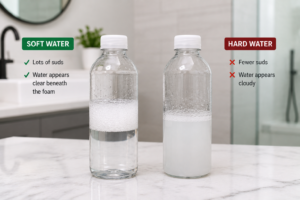
Let’s start with the easiest tests to do at home.
- Fill a clear bottle about one-third full with water from your tap.
- Add a few drops of liquid soap (8-10 drops will work).
- Shake vigorously for about 10-15 seconds.
Results:
If it’s soft water: you’ll have a lot of suds, and the water will appear clear beneath the foam.
If it’s hard water: you’ll have fewer suds, and the water will appear cloudy.
Test #2: Use a Water Hardness Test Strip
Water hardness test strips are inexpensive, easy to use, and available at most home improvement stores or online retailers.
- Fill a glass with cold tap water.
- Dip the test strip into the water and wait for the indicated amount of time.
- Compare the color change to the chart provided by the kit.
Results:
If it’s soft water: hardness reading will be about 0-70 ppm, which indicates little to no scale-forming minerals.
If it’s hard water: hardness reading will be about 71-180 ppm, which means there’s some noticeable scale building.
If it’s very hard: hardness reading will be about 180 to up to 500 ppm, which indicates significant risk of plumbing and appliance damage from limescale.
Test #3: Review Your Water Report
If your home receives municipal water, your local utility provider likely publishes an annual water quality report.
- Visit your local water provider’s website.
- Locate the annual water quality or Consumer Confidence Report.
- Look for information regarding water hardness, calcium and magnesium levels, and total dissolved solids.
Results:
If it’s soft water: hardness levels are listed as low or below 60 ppm.
If it’s hard: hardness levels are listed to exceed 60-180 ppm.
Test #4: Professional Water Testing
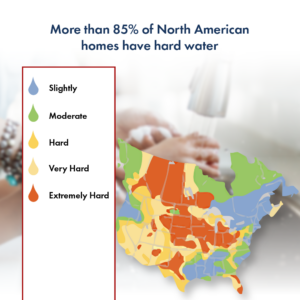
Hard Water Map
- Contact a certified water testing laboratory or your local water treatment professional.
- Follow their instructions and collect a water sample.
- Submit the sample for analysis, where they will evaluate the water hardness, calcium and magnesium concentration, total dissolved solids, and pH levels.
Results:
If it’s soft water: results will find low calcium and magnesium levels.
If it’s hard water: results will find high calcium and magnesium levels.
What Should You Do if You Have Hard Water?
Once you’ve tested your water and confirmed the presence of high mineral content, the next step is determining how to address it. There are several options available to protect your home’s plumbing system.
Salt-Based Water Softeners: These systems remove calcium and magnesium through ion exchange. This eliminates the source of hard water, but it requires adding salt to the water and requires ongoing maintenance.
Chemical Descalers: These descalers dissolve existing scale buildup inside appliances. This is an effective option for short-term cleaning, but it’s only a temporary solution that doesn’t prevent future buildup.
Electronic Hard Water Descalers: These systems focus on preventing minerals from forming hard scale deposits. Instead of removing minerals, they alter how calcium and magnesium behave as they travel through the plumbing system. That’s what you can expect from ScaleSweeper.
Why ScaleSweeper is a Smarter Solution
As the #1 laboratory-tested hard water descaler, ScaleSweeper provides an innovative way to protect your home from damage.
ScaleSweeper uses advanced electronic descaling technology to prevent new limescale from forming while helping to reduce existing buildup over time. This protects pipes and appliances and maintains water flow and pressure.
Unlike traditional softeners, ScaleSweeper requires no salt, chemicals, or maintenance. It also produces no wastewater. It’s the whole-house protection solution without altering your water chemistry.
Hard water is incredibly common, and a lot of homeowners live with it for years without realizing the impact it has on their plumbing and appliances.
Simple tests can confirm the issue, and modern solutions like ScaleSweeper make it easier than ever to protect your home from the effects of limescale buildup.
The sooner you identify hard water, the sooner you can take steps to preserve your plumbing, extend appliance life, and improve overall system performance.

